Bontebok
– a distinctive antelope
of the Eastern Cape
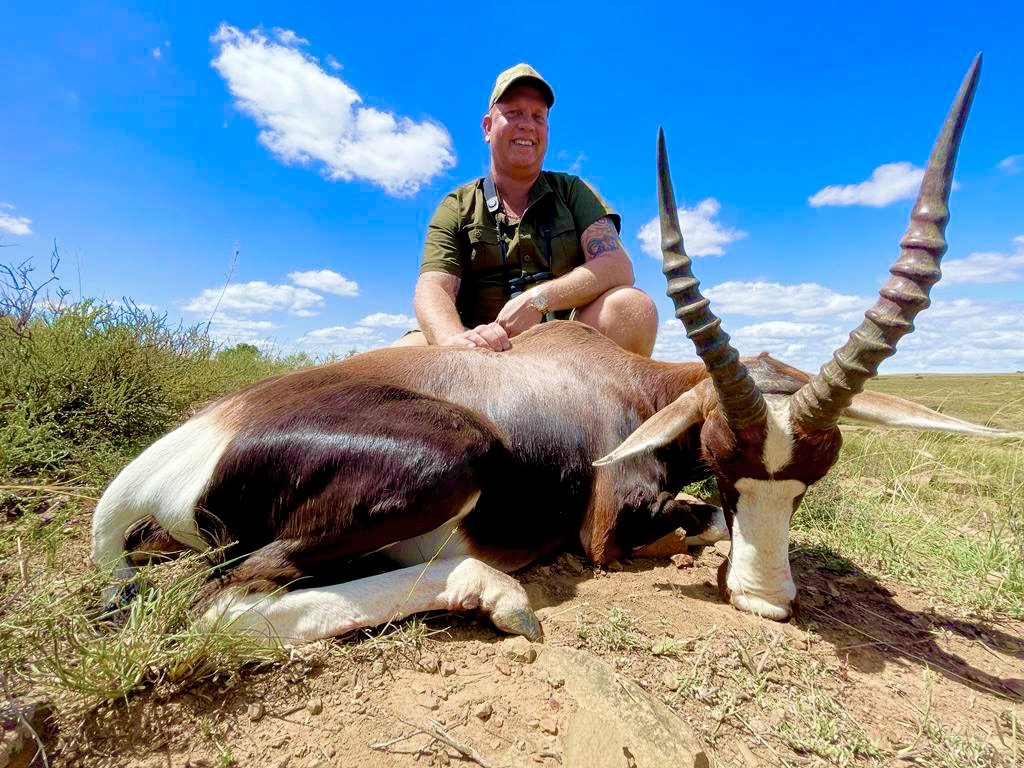
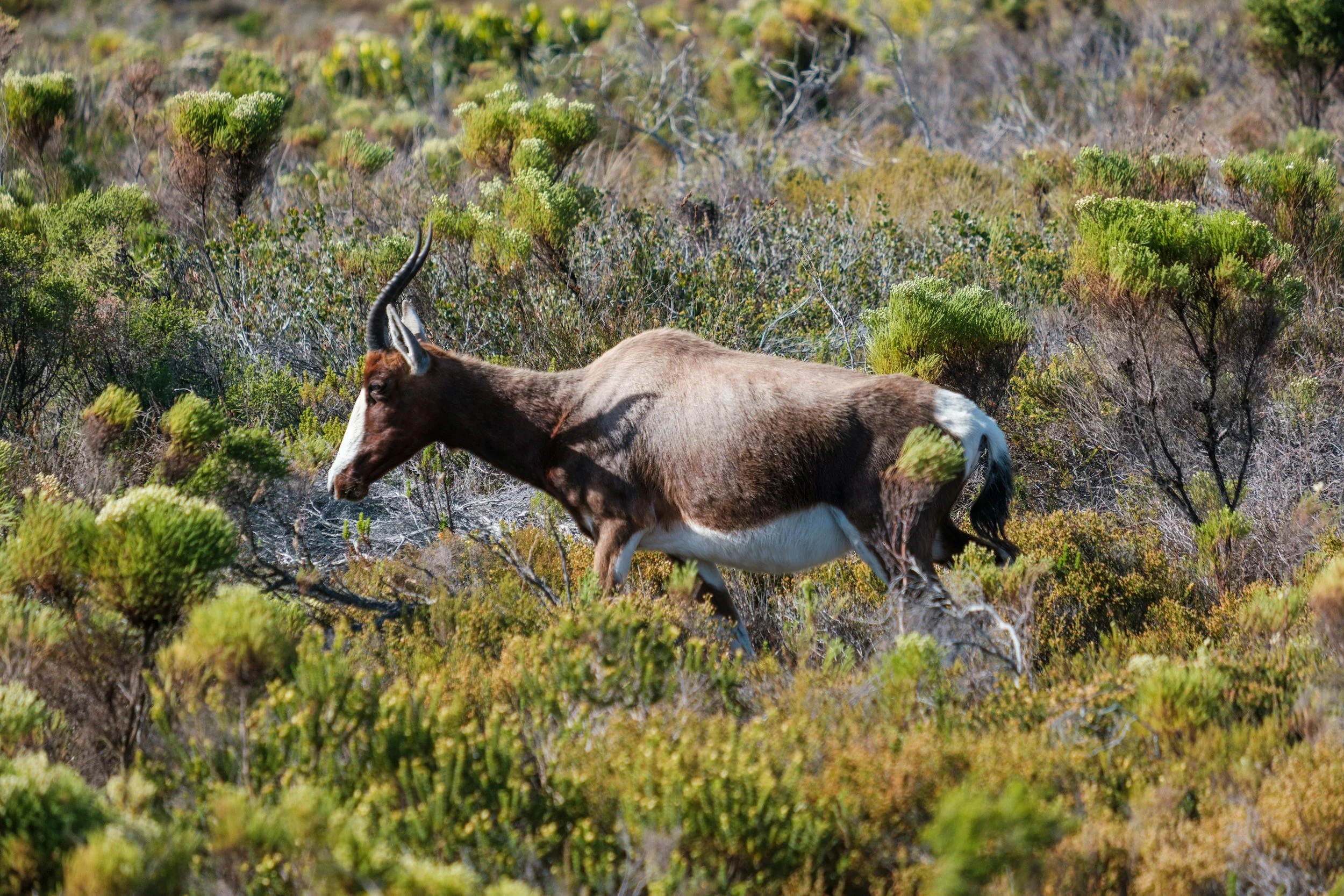
The bontebok (Damaliscus pygargus pygargus) is one of South Africa’s most visually distinctive antelopes. The deep chestnut-purple coat, bright white legs and bold facial blaze make it instantly recognisable in the veld. It is closely related to the blesbok (Damaliscus pygargus phillipsi), and many hunters choose to take both subspecies as a way to experience the variation within the same antelope family.
At Side by Side Safaris, bontebok are hunted in classic Eastern Cape terrain: open grasslands, rolling hills and mixed veld with scattered cover. This creates hunts with good visibility, realistic stalks and technically interesting shot situations.
Bontebok description, senses and behaviour
Although it shares a lot of traits with the blesbok, the bontebok is darker, more contrasting in colour and typically shows deeper horn grooves and pure white lower legs. It is a medium-sized, robust antelope, well adapted to open terrain and moderate slopes.
Bontebok live in small to medium-sized herds, usually with a dominant ram. They are diurnal and move predictably between feeding areas and vantage points. Their eyesight is excellent, and they react quickly to movement, especially when the wind carries unfamiliar scent.
Habitat in the Eastern Cape
On our areas in the Eastern Cape, bontebok are typically found in:
– open grasslands and highveld-type terrain
– gently rolling hills with long sightlines
– mixed veld with patches of low bush
– shallow valleys with slightly greener grass
This combination offers both the animals and the hunter good visibility and clear shooting lanes.
Hunting bontebok with Side by Side Safaris
At Side by Side Safaris, bontebok are hunted using spot-and-stalk. The species is not overly nervous, but open country and longer shot distances demand discipline and proper shooting fundamentals.
A typical hunt looks like this:
– we glass hills, valleys and open plains to locate a mature ram
– we plan a wide approach based on wind and terrain
– we close the distance slowly and set up a stable shooting position on sticks
– most shots are taken at 120–220 metres
If stalk, wind and movement are handled correctly, bontebok will often give a calm, broadside opportunity.
Shot placement

The vital zone on a bontebok is classic in position but can appear visually small due to the strong colour contrast.
Optimal point of aim:
– mid-body
– one third up from the lower chest line
– just behind the shoulder
On quartering away shots, aim slightly forward to ensure a diagonal pass through the heart-lung area. On quartering to shots, use a premium bullet and place the shot toward the front of the shoulder.
Best calibres
At Side by Side Safaris, we recommend:
– .270 Win (130–150 grain premium bullets)
– 6.5 PRC
– .308 Win (150–165 grain)
– .30-06
These calibres provide a good balance of trajectory, recoil and penetration at typical bontebok distances in the Eastern Cape.
Ethical hunting and selection
At Side by Side Safaris, we only harvest mature bontebok rams. Selection is based on:
– horn length and base thickness
– depth of horn grooves
– overall body mass and musculature
– mature, dominant behaviour
This approach ensures both strong trophies and a stable, well-managed population.
What surprises hunters most?
– how clearly bontebok differ from blesbok in the field
– how visible and striking they look in natural Eastern Cape light
– how technical 120–220 metre shots can feel in rolling terrain
– how well the finished trophy presents once mounted

Facts - Bontebok
NAME: BONTEBOK
SCIENTIFIC: DAMALISCUS DORCAS DORCAS
WEIGHT MALE: 61 KG
WEIGHT FEMALE: 58 KG
SHOULDER HEIGHT MALE: 95 CM
SHOULDER HEIGHT FEMALE: 90 CM
MATING SEASON: MARCH / APRIL MAY
FAQ Bontebok hunting
-
No, bontebok has a more limited distribution than blesbok, but is well managed on selected Eastern Cape concessions like Side by Side Safaris.
-
It is not extremely nervous, but open terrain and longer shot distances mean the hunt demands good stalking and shooting technique.
-
At Side by Side Safaris, most bontebok are taken between 120 and 220 metres.
-
Mid-body, one third up from the leg line and just behind the shoulder to hit the heart-lung area.
-
.270 Win, 6.5 PRC, .308 Win and .30-06 with quality bullets all work very well.
-
Early morning and late afternoon, when animals move more and light conditions help with reading terrain and shot angles.