Red Hartebeest
– one of the savannah’s most alert antelopes
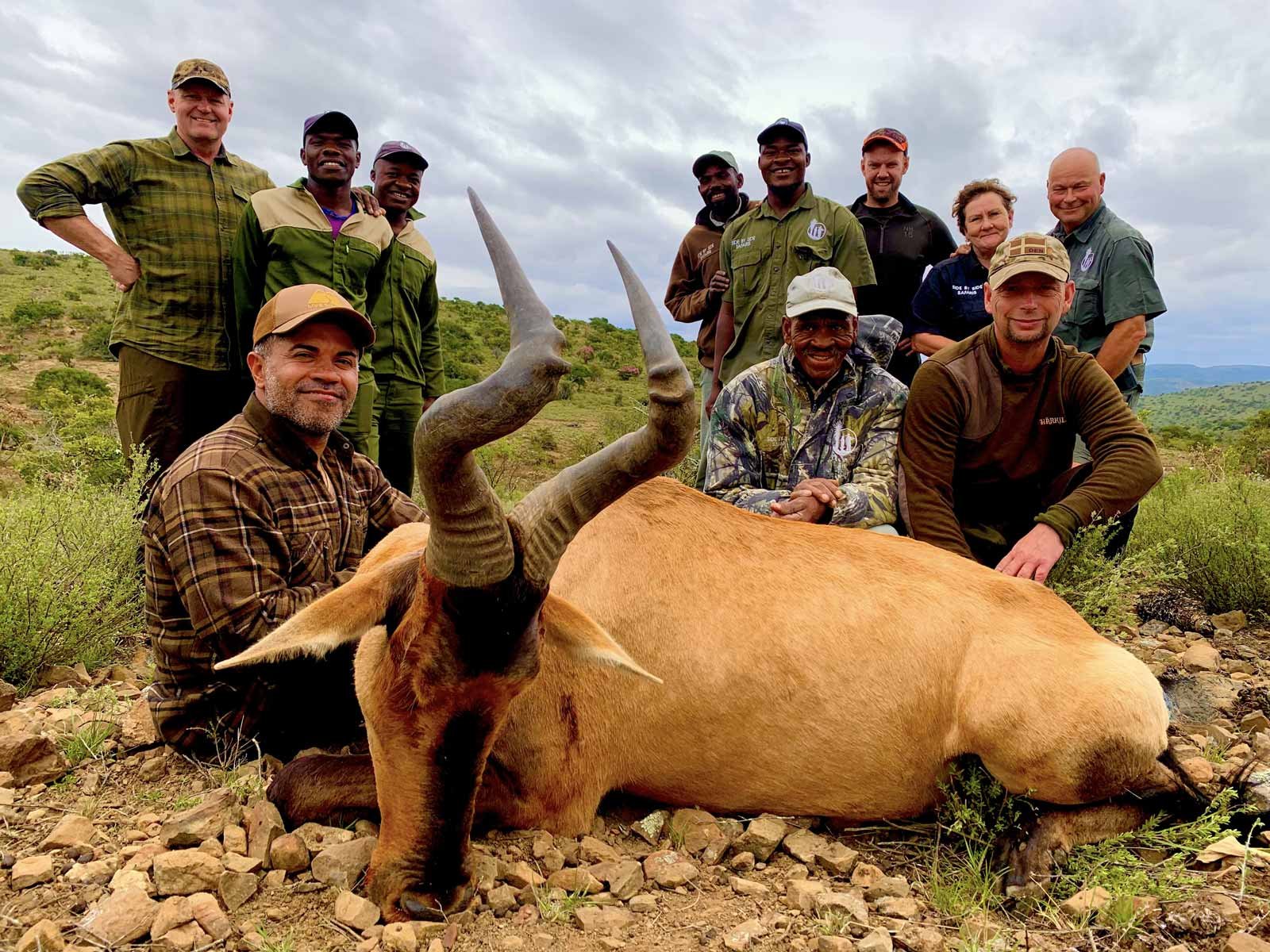
The Red Hartebeest (Alcelaphus buselaphus caama) is one of Africa’s most distinctive antelope species. Its elongated facial profile, deep red coat and sharply angled horns make it instantly recognisable. The species is extremely alert, highly visual and built for endurance, which is why it is grouped with the “horse antelopes” such as roan and sable – antelopes known for speed, stamina and a running style closer to a gallop than a typical antelope gait.
Red Hartebeest live in small to medium-sized herds and cover large areas while feeding and positioning themselves to maintain visibility and escape routes. They detect movement at long distances and are often among the first species to flee when danger is sensed.
Red Hartebeest description, senses and behaviour
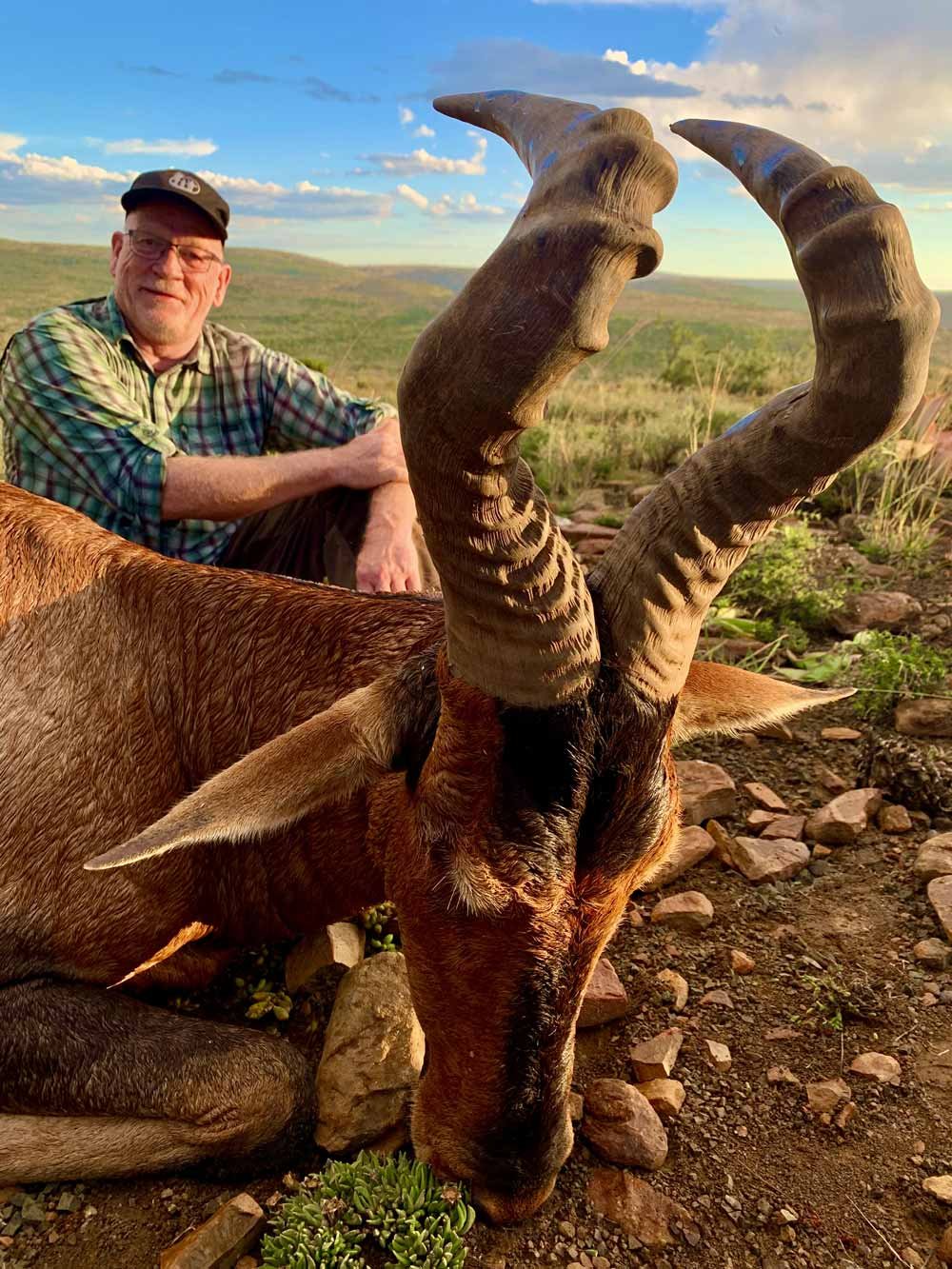
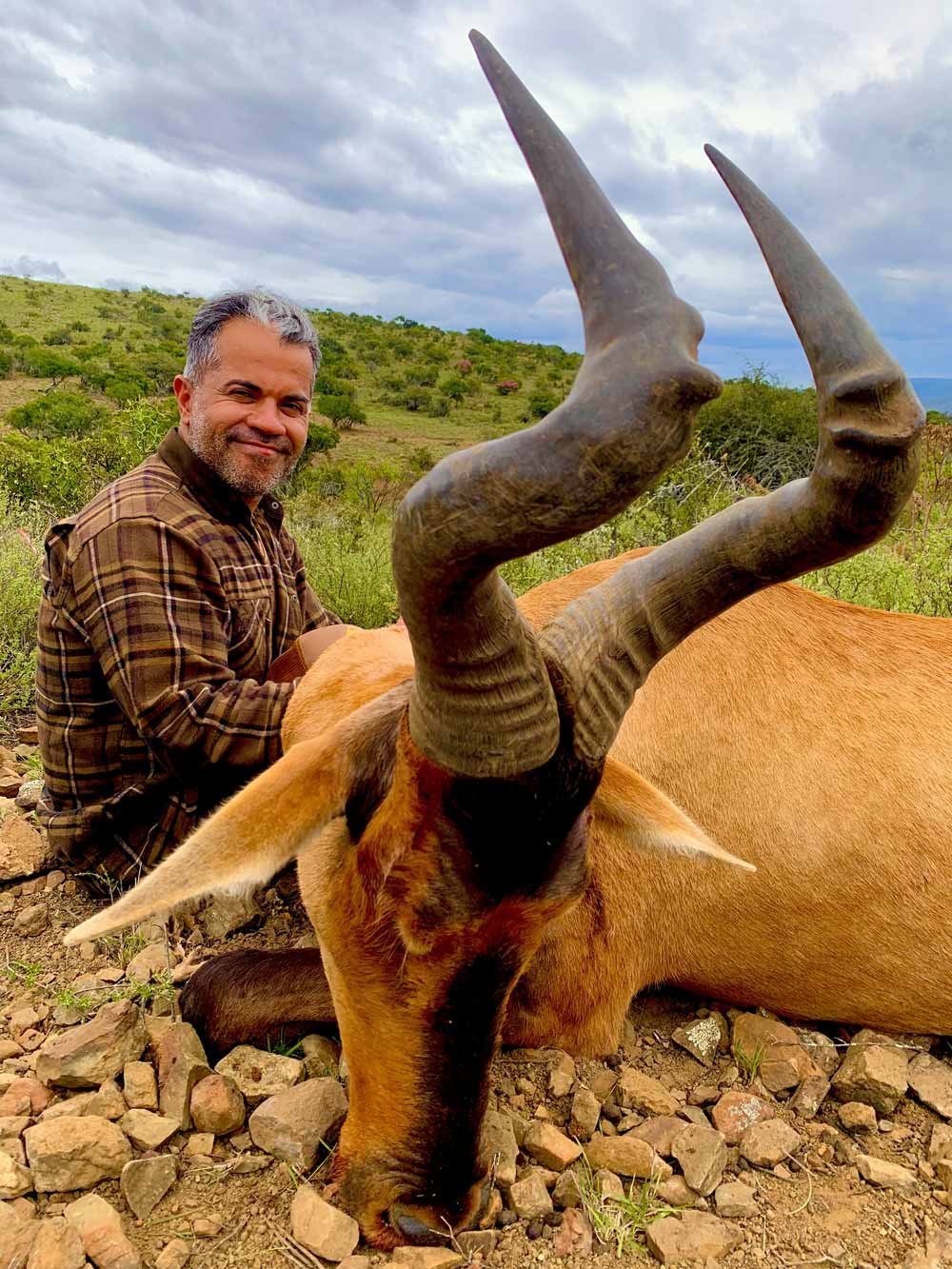
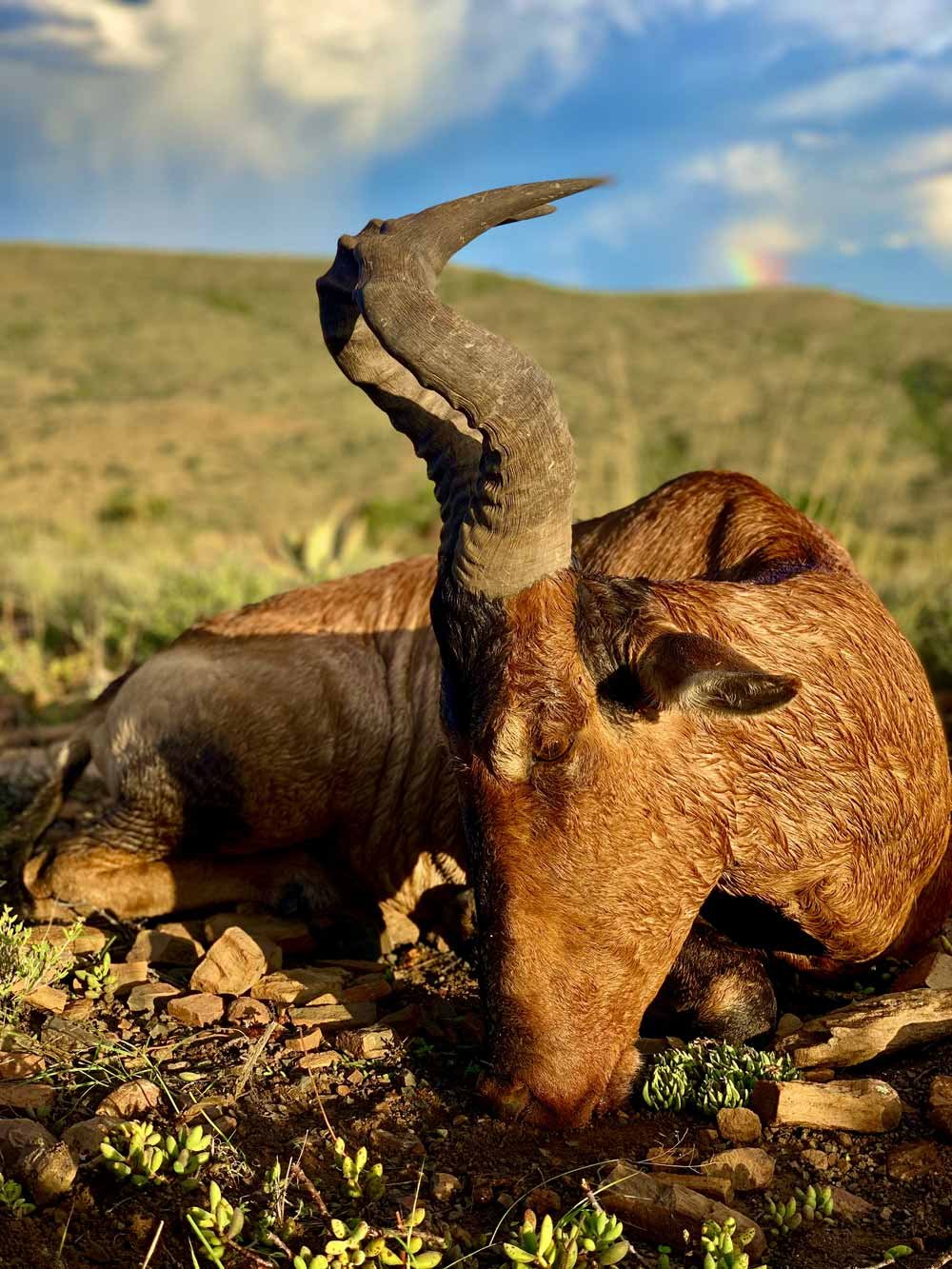
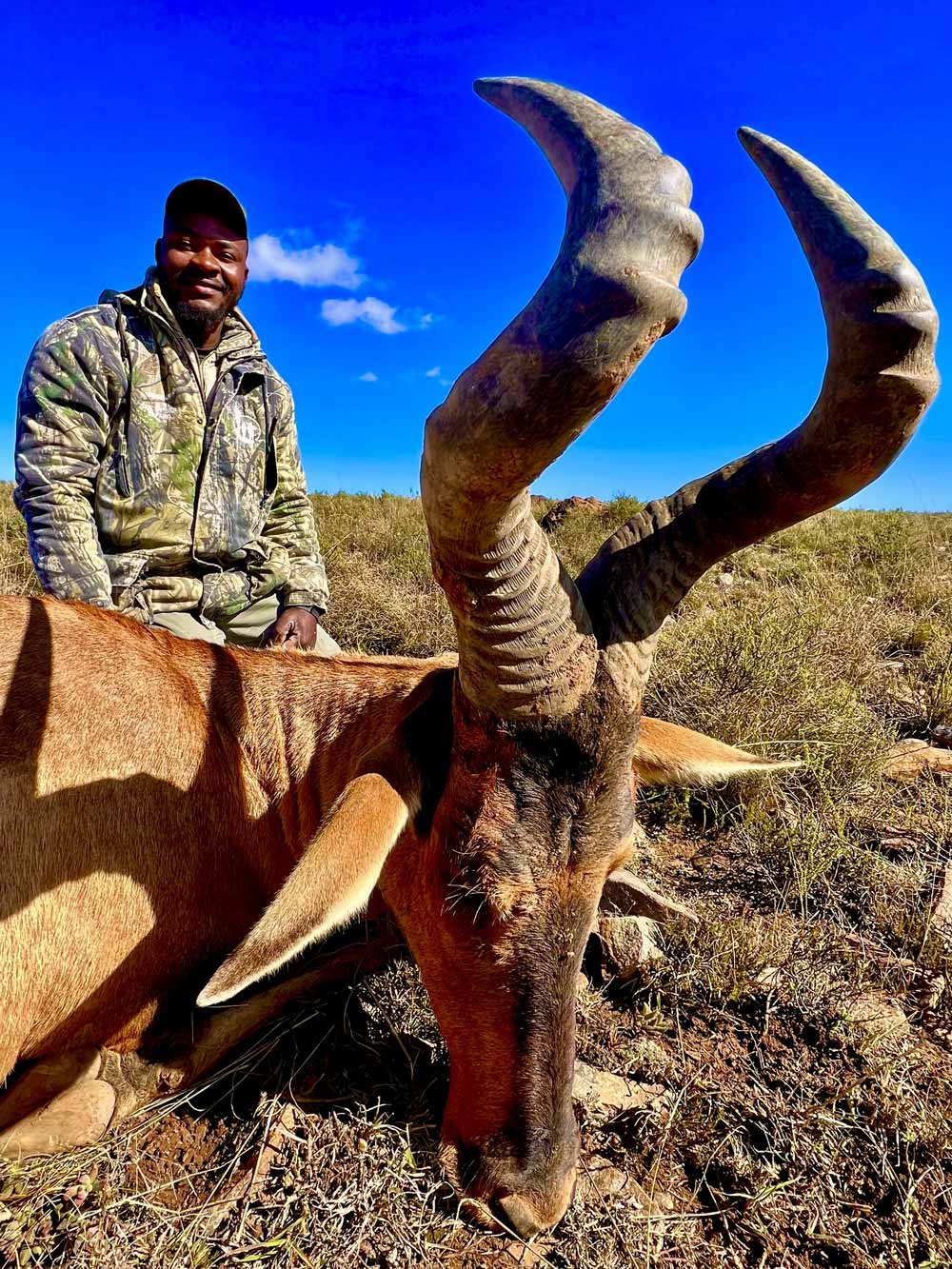
The Red Hartebeest has one of the longest heads of any African antelope, combined with a tall shoulder, sloping hindquarters and a powerful chest. The horns sweep backwards and then curve forward at the tips. Mature bulls develop visibly thicker horn bases and deeper facial grooves.
Sight is the hartebeest’s primary sense. It prefers terrain with visibility and often stands on slight rises or open flats to maximise its field of view. Smell and hearing support the hartebeest’s high alertness and contribute to its quick decision-making.
Socially, the species forms stable herds with cows often acting as early-warning individuals, while dominant bulls exhibit territorial and postural displays.
Habitat
Red Hartebeest favour dry savannas, open grasslands and semi-open shrub areas. On our concession they are often seen in transition zones between grass plains and scattered bush – areas that combine grazing, visibility and safe escape routes. Their local movements follow seasonal grass quality and water access.
Hunting the Red Hartebeest
Hunting Red Hartebeest is classic spot-and-stalk in open terrain. Their alert nature and preference for open landscapes mean most stalks require careful planning, long approaches and precise wind management.
Shot opportunities typically occur between 180 and 280 metres. Wind, mirage and the animal’s constant movement add technical difficulty. Even with perfect shot placement, hartebeest commonly run 40–120 metres before collapsing.
Shot placement
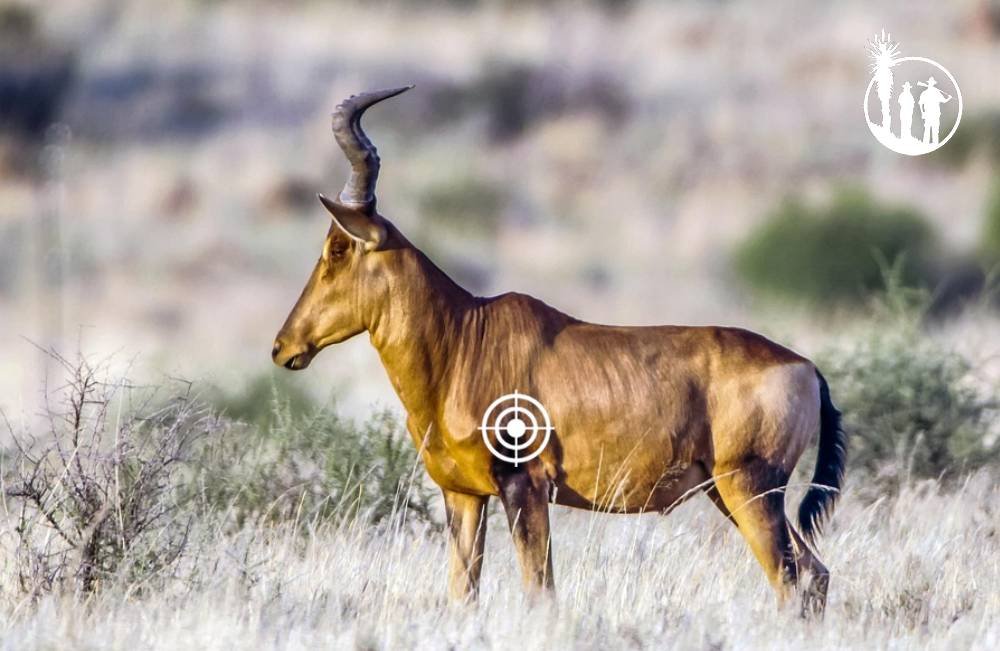
The vital zone is narrower and positioned higher than many hunters expect.
Optimal point of aim:
– Mid-body
– One third up from the leg line
– Just behind the shoulder
Quartering away:
– Aim slightly forward to ensure diagonal penetration through the vitals
Quartering to:
– Aim toward the front of the shoulder with a premium bullet capable of handling bone
Best calibres
Because shot distances are often long, flat-shooting calibres are recommended.
Minimum:
– .270 Win with premium bullets
Optimal:
– 6.5 PRC
– 7mm Rem Mag
– .308 Win (165–180 grain)
– .30-06
– 7mm-08
These calibres provide reliable penetration and energy at longer ranges.
Ethical hunting and maturity
We harvest only mature bulls. Maturity indicators include:
– Thick horn bases
– Deep facial grooves
– Darker colouration
– Heavy neck muscles
– Dominant, territorial behaviour
Selective harvesting ensures healthy population structure and supports long-term genetic quality.
What surprises hunters most?
– How early hartebeest detect movement
– Typical shot distances are longer than expected
– The narrow, high vital zone
– Their toughness after impact
– The impressive trophy appearance up close
FAQ – English
Is the Red Hartebeest difficult to hunt?
Yes. It has excellent eyesight, reacts instantly to movement and tends to keep long distances.
What shooting distance is typical?
Most shots are taken between 180 and 280 metres.
What is the best shot placement?
Mid-body, one third up from the leg line, just behind the shoulder.
Which calibre works best?
6.5 PRC, 7mm Rem Mag, .308 Win and .30-06 are all excellent choices.
How far will a hartebeest run after a good shot?
Typically 40–120 metres, even with perfect placement.
How do you identify a mature bull?
Thick horn bases, deep grooves, darker coat, strong neck and dominant behaviour.

Facts - Red Hartebeest
NAME: RED HARTEBEEST
SCIENTIFIC NAME: ALCELAPHUS BUCELAPHUS
WEIGHT MALE: 150 KG
WEIGHT FEMALE: 120 KG
SHOULDER HEIGHT MALE: 1.25 M
SHOULDER HEIGHT FEMALE: 1.15 M
MATING SEASON: MARCH/ APRIL
FAQ - Red Hartebeest Hunting
-
Yes. It has excellent eyesight, reacts instantly to movement and tends to keep long distances.
-
Most shots are taken between 180 and 280 metres.
-
Mid-body, one third up from the leg line, just behind the shoulder.
-
6.5 PRC, 7mm Rem Mag, .308 Win and .30-06 are all excellent choices.
-
Typically 40–120 metres, even with perfect placement.
-
Thick horn bases, deep grooves, darker coat, strong neck and dominant behaviour.