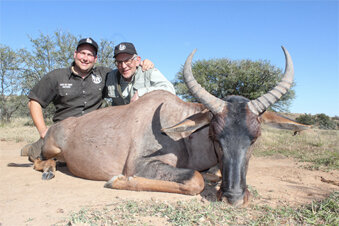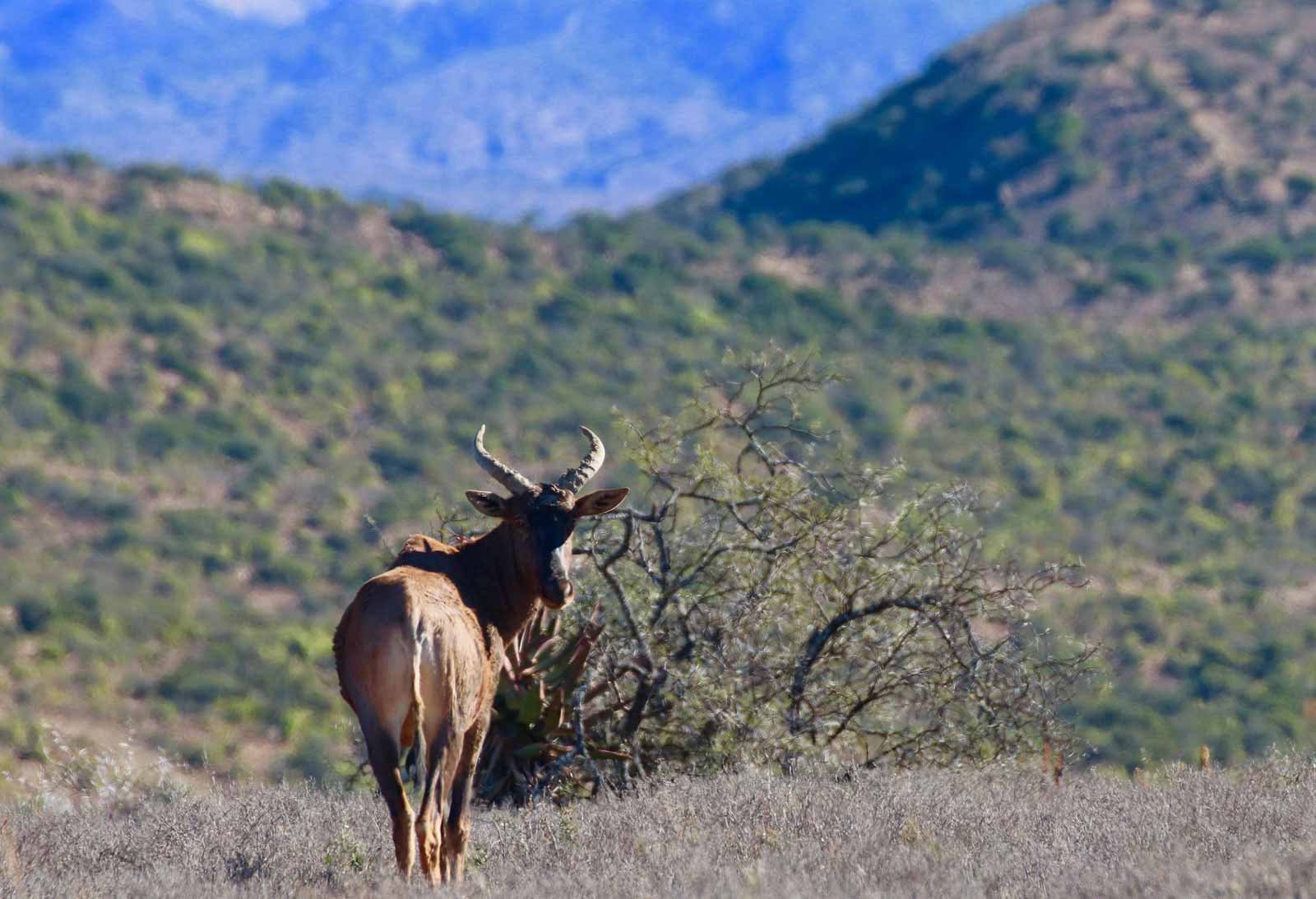

Tsessebe
– One of Africa’s Most Underrated Antelopes
The tsessebe (Damaliscus lunatus) is one of Africa’s most distinctive and athletic antelope species. Known for its speed, its dark glossy coat and its upright head posture, it stands out immediately on the open plains where it thrives. With superb eyesight and fast reaction time, tsessebe often detect predators and hunters long before they are spotted themselves.
While not always considered a “headline” trophy, the tsessebe is one of the most rewarding antelopes to hunt. It combines alertness, speed and long shooting distances – and it rewards the hunter who can move quietly, read the wind and place an accurate shot.
Tsessebe description – behaviour, senses and habitat
Tsessebe usually live in small to medium-sized herds dominated by a mature bull. They often place themselves on small rises or termite mounds to survey the terrain. Their primary defence is flight, and they are among Africa’s fastest antelope when spooked.
Senses
Tsessebe rely heavily on sight. They detect movement at long ranges and communicate quickly within the herd. Their sense of smell is strong, and approaching from the wrong wind is almost impossible.
Habitat
On our concession, tsessebe favour open grassland, gently rolling plains and areas with short grass that allow full visibility and a clear escape route.
The hunt – challenge, terrain and method
Tsessebe hunting is classic spot & stalk.
Expect longer shots, typically between 150–250 meters. The herds move continuously, and the wind plays a major role in planning the approach.
A typical hunt goes like this:
Glass large areas with binoculars and spotting scope.
Identify a mature bull.
Plan a stalk route that keeps you low, out of sight and in the right wind.
Close the distance carefully using natural contours.
Take a stable shot from sticks or prone.
Expect the animal to run 20–80 metres even after a perfect hit.
This is a hunt that rewards patience, precision and calm shooting. Many hunters consider the tsessebe one of the most satisfying antelope species to take.
Shot placement
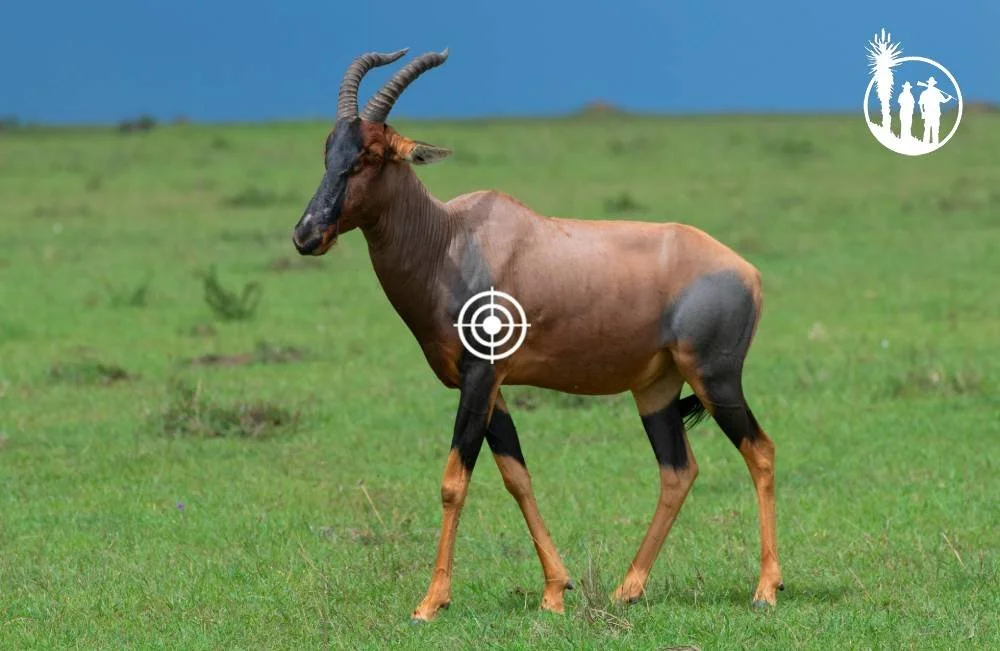
The vital zone sits slightly lower than many expect due to the tsessebe’s long legs.
Ideal point of aim:
– Middle of the body
– One third up from the bottom line
– Just behind the front leg
Angled shots:
– Quartering away → aim slightly forward
– Quartering to → aim toward the back of the near shoulder
Premium bullets are recommended due to the tsessebe’s relatively tough shoulder structure.
Optimal calibre
Tsessebe does not require heavy calibres, but a flat-shooting rifle is a significant advantage.
Minimum:
– .270 Win with 130–150 gr premium bullets
Optimal choices:
– 7mm Rem Mag
– 7mm-08
– .308 Win (165–180 gr)
– .30-06
– 6.5 PRC
These calibres offer excellent accuracy, manageable recoil and reliable penetration at longer ranges.
Ethical hunting & conservation
At Side by Side Safaris we only hunt mature bulls, selected carefully based on age and behaviour. Responsible management ensures stable populations, healthy genetics and long-term sustainability. Hunting revenue contributes directly to anti-poaching, habitat protection and wildlife monitoring.
What hunters are often surprised by
– How quickly tsessebe detect movement
– How long the shooting distances can be
– How much the wind affects light bullets
– How much the animals move while you aim
– How rewarding the experience is

Facts - Tsessebe
NAME: TSESSEBE
SCIENTIFIC NAME: DAMALISCUS LUNATUS
WEIGHT MALE: 140 KG
WEIGHT FEMALE: 126 KG
SHOULDER HEIGHT MALE: 1.26 M
SHOULDER HEIGHT FEMALE: 1.26 M
MATING SEASON: MARCH / APRIL
FAQ - Tsessebe Hunting
-
Yes. It is alert, fast and constantly moving.
-
150–250 metres.
-
Early morning and late afternoon.
-
Because the hunt requires skill, patience and accurate long-range shooting.